A Journey Without A Map
For months, I carried a single image in my mind — blue tarps stretched across mountain slopes in northern Vietnam, sheltering women who had become outcasts in their own villages. I had seen it in a New York Times article about young Hmong women trafficked into China for forced marriages and sexual exploitation. Some eventually returned home, only to be rejected by their families and communities. I could not let it go. Encouraged by my husband Philip and our three young children, and by a quiet voice in my heart, I traveled to Vietnam in April 2012 to find them.
I had no plan and no roadmap.
For three weeks, I traveled hundreds of kilometers in cars, trucks, buses, on the back of motorcycles, and on bicycles. The winding roads and streets through clearing and thickets of vegetation led me to breathtaking views of the highlands, from Hanoi to the northernmost mountains of Vietnam and even across the border into China, asking questions and following one lead after another. Eventually, after numerous inquiries, a friend of a friend of a friend connected to Mrs. Mai, a remarkable woman who trained local women to transform flax into handwoven linen and helped many rebuild their lives through meaningful work.
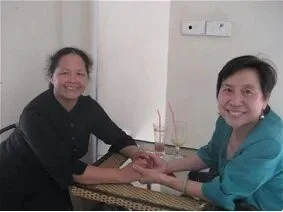
We met in Hanoi, over tea, at a juice bar across from Van Mieu, the beautiful Temple of Literature in Hanoi. She was tickled to know I have been looking for her since August 2011. “Like you, many people have been looking for me, too. They came to my village and showed me the newspaper.”
We shared our stories. She told me about how the husbands would come to her factory and beat up the wives, so she had to get the authority to send police to protect her women. But to save the husbands' face, she invited them to come to the factory on pay days. As she handed them part of the money their wife earned, they had to sign a paper that they allowed the women to come and work every day. Great lesson about grace!
Quite the storyteller, Mrs. Mai's description of her women reminded me of the women I met in the mountains while searching for the women, with a roll of flax plants tied to their waist, using their fingers to shred the tough flax fibers into thread or weave them into decorative strips while herding their cows or carrying great bundles of firewood or vegetation on their backs.
With so many tourists finding her via the NYT article, Mrs. Mai and her two factories have become very busy making souvenirs. But so many more women still need help.
As we shared stories, she invited me to visit her village and meet some of the women I had been searching for.
"Come with me tonight," Mrs. Mai said. "We will take the bus and will be in Ha Giang tomorrow...."
That evening, I asked myself: "What would I do if I met these women tomorrow?" I would listen to their stories, take photographs, and return home to tell others about them, I thought, only to be confronted by another question: "How would that be different from all the other visitors who came simply to see them?Be patient. Why not come back with a tangible offering to help them and their families, and be there for them?"
That question changed the course of not just this journey. I realized I did not want to be a witness passing through. I wanted to return with something of value—to build relationships, create opportunities, and remain present long after the photographs were taken.
In November 2012, I returned to Vietnam with a plan and a map.
The plan was simple. Philip, who was already a patternmaking instructor at the Rhode Island School of Design, would teach patternmaking so the women could create garments in standard sizes, making it easier to reach broader markets while preserving their traditional techniques and artistry.
The map came from Philip's earlier humanitarian work in Ha Giang, where he had delivered medical equipment and supplies to local clinics and knew the region well.
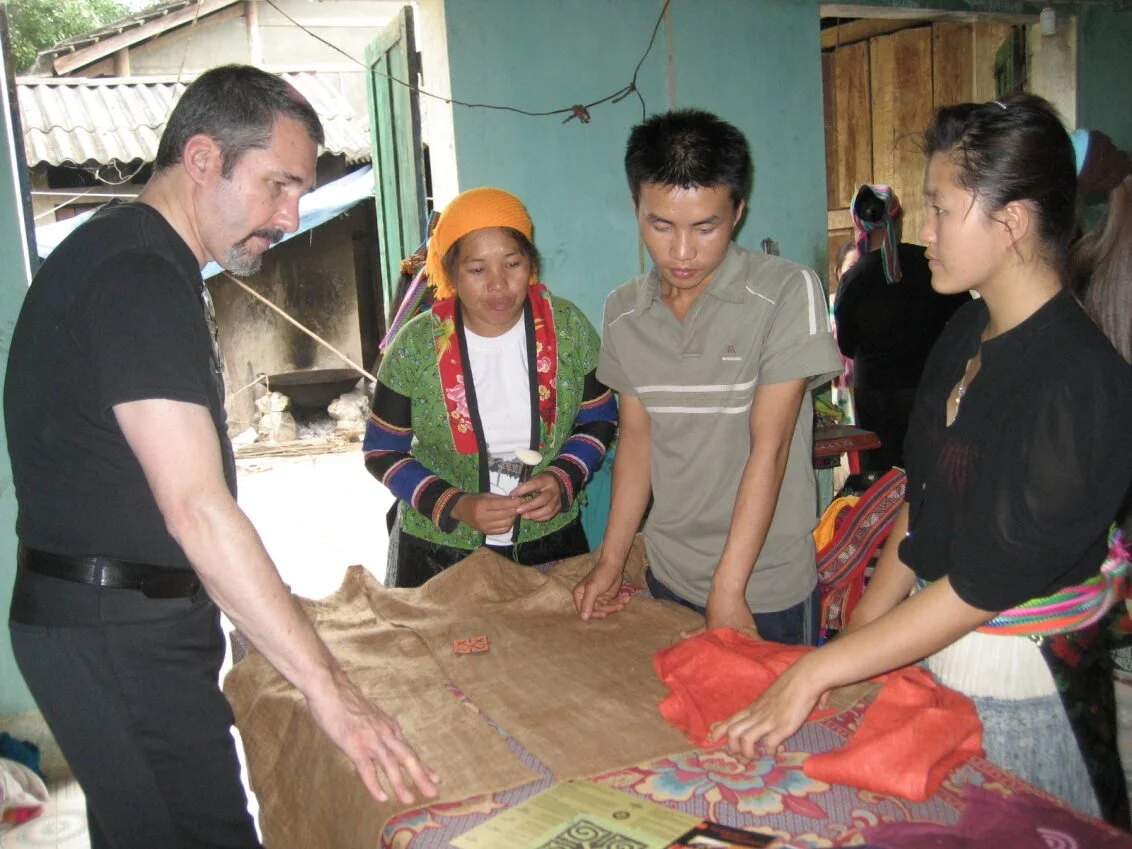
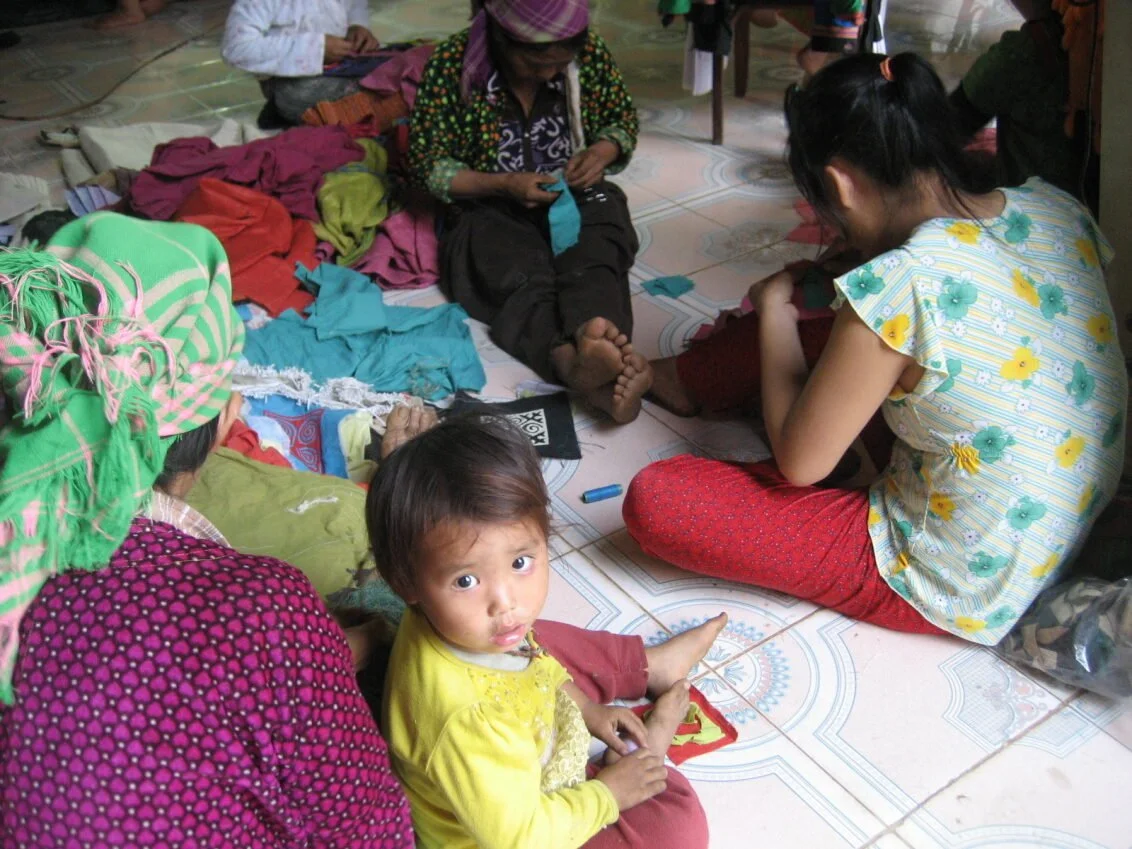
Mrs. Mai set up a long table in her courtyard so Philip could conduct a pattern-making class. When the rain came, we all moved inside her workroom with big rolls of fabric. While the moms cut, sewed and embroidered, some used the old custom of ironing or flattening the newly woven rough linen, their children played nearby, or watched us through the windows.
The journey that began with no plan and no map ended with a purpose full of love, understanding, and changed my life. That little voice in my heart was right. “Be patient,” because this is a lot more than just an experience, but also a conviction that beauty, dignity, and opportunity belong together.
That journey eventually led to years of collaboration with artisan communities and became part of the foundation of Anh55. The label tags in every Anh55 garment are hand-embroidered by refugee women who have lived in camps for several generations. When you wear an Anh55 piece, their hands, life stories, and dreams are part of what you carry.
Today, when Philip and I design and create a garment, we think not only about beauty, craftsmanship, and fit, but also about the human stories woven into every piece.
The women I set out to find taught me something unexpected: Beauty becomes deeper when it carries human connection. And some journeys only reveal their purpose when we are willing to walk them slowly.— Anh Sawyer